|
Solitary confinement – the isolation of a prisoner from meaningful human contact for twenty-two or more hours per day – remains one of the most institutionally resilient practices in contemporary penology. This article proceeds from a methodological repositioning: whether solitary confinement is harmful has been definitively resolved. Its destructive impact upon physical and mental health, its failure to achieve any declared penological objective, and its role in provoking self-harm, suicide, and psychological disintegration constitute an empirical axiom. The central inquiry shifts to the structural: why, despite more than a century of clinical and criminological evidence, does solitary confinement remain embedded in prison systems worldwide? The article integrates doctrinal analysis of ECtHR jurisprudence and CPT standards and reports, empirical synthesis across criminology and psychiatry, comparative legislative analysis across multiple jurisdictions, and critical-theoretical interpretation drawing on Foucault, Cohen, and Bauman. It reconstructs the normative architecture governing isolation – including the CPT’s PLANN framework and the doctrinal arc from Ramirez Sanchez v. France (2006) to the structural incompatibility principle in Schmidt and Šmigol v. Estonia (2023) – situating this within the logic of carceral power. Three undeclared functions sustain the practice: neutralisation of surplus populations, disciplinary terror as a mechanism of internal governance, and symbolic affirmation of state sovereignty. The article also analyses terminological substitution as a structural evasion mechanism, informal prison hierarchies in post-Soviet and comparable systems, and the political economy of punishment as an obstacle to reform. It concludes that solitary confinement persists not because it is effective, but because it is institutionally convenient – as a disciplinary instrument, a political symbol, and a substitute for systemic reform deferred by resource constraints and electoral calculation. |

|
Prohibition of torture: standards of the European Committee for the Prevention of Torture and practice of the European Court of Human Rights regarding police activities |

|
The article is focused on the origins of Russian criminal and prison subculture and the current state of this phenomenon, which is imported by the Russian Federation within its imperialistic neocolonial policy aimed at restoring the ‘Soviet space’. |

|
|

|
|
|
|
|

|
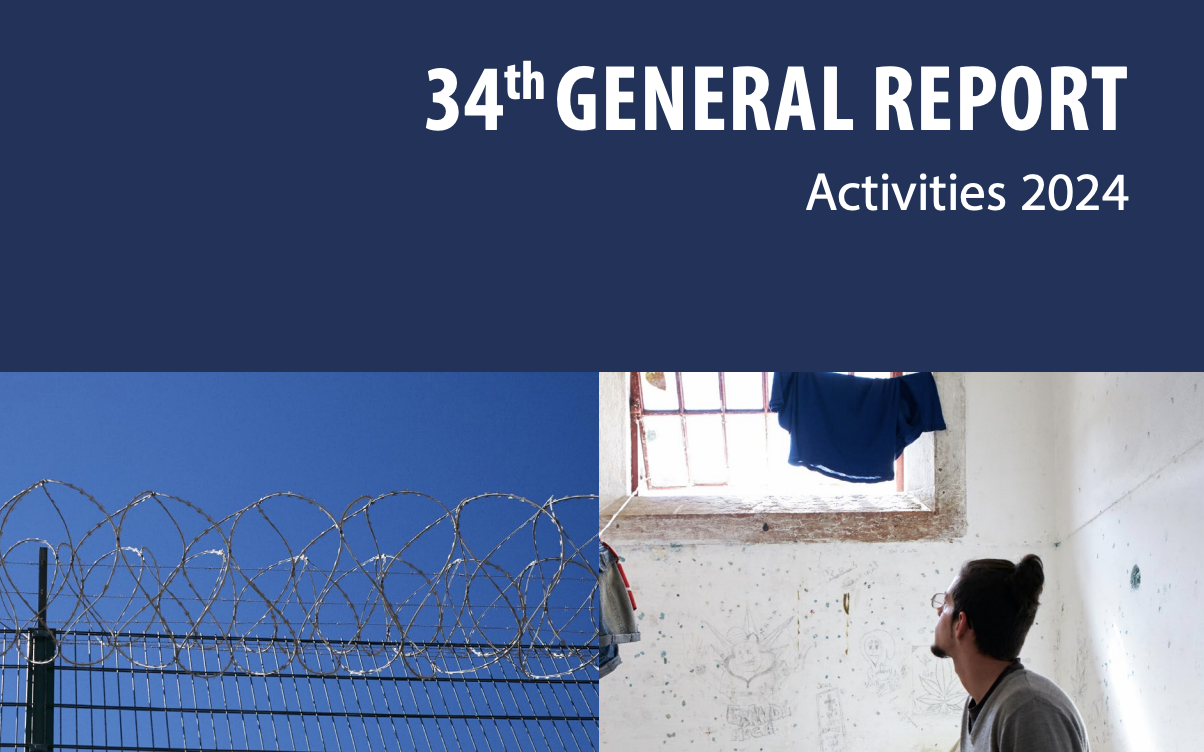
У своєму щорічному звіті ЄКЗК висловлює серйозну стурбованість значним зростанням переповненості в'язниць у 2024 році, особливо в деяких західноєвропейських країнах, і закликає уряди вирішити цю проблему рішучими заходами. Переповненість в'язниць повністю підриває функціонування в'язниць і потенційно наражає людей на нелюдське та таке, що принижує гідність, поводження. Це призводить до погіршення умов утримання, зростання напруженості та насильства, а також до скорочення цілеспрямованої діяльності та підготовки до повернення ув'язнених до життя в суспільстві. |
|
|
 MS13 в обох Америках: Як найвідоміша у світі банда не піддається логіці та чинить опір знищенню
|
Актуальність дослідження обумовлена тим, що станом на 2007 рік у США діяло щонайменше 30 тис. банд, які об’єднували понад 800 тис. їхніх членів. Станом на 2009 рік понад 900 тис. членів банд проживали у межах місцевих громад по всій країні, а понад 147 тис. перебували в американських в'язницях. Станом на 2011 рік за різними оцінками 1,4 мільйона членів банд брали участь у злочинній діяльності або принаймні були членами 33 тис. банд. |
 Ця стаття присвячена дослідженню одного з аспектів феномену в’язничних банд у США, а саме діяльності білих супремаcистських в’язничних банд.